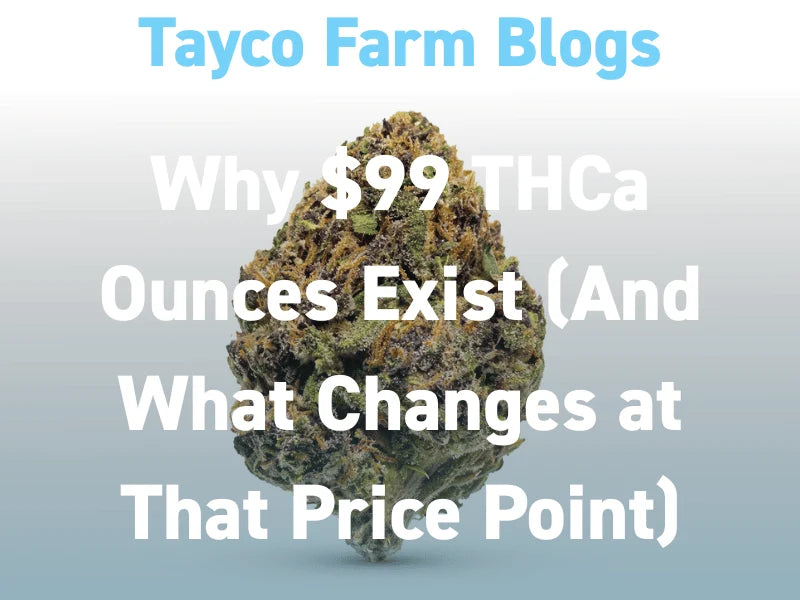
When you pick up a jar of craft hemp flower, you’re not just holding a bud — you’re holding the result of genetics, farming practices, curing, and care. At TayCo Farms, we believe transparency builds trust, so let’s break down what you’re actually looking at when you hold a nug of CBD or THCA flower.
Trichomes: The Resin Factories
Trichomes are the tiny, frost-like crystals that cover the flower. They’re not just for looks — these resin glands are where cannabinoids (like CBD and THCA) and terpenes are produced and stored.
-
What to look for: A dense coating of intact, milky or amber trichomes usually signals potency and proper handling.
-
Why it matters: Without healthy trichomes, the flower has less flavor, less aroma, and less impact.
Calyxes: The Building Blocks of the Bud
Calyxes form the base of each nug, stacking together to create that dense, layered structure you see in premium flower.
-
What to look for: Well-formed, compact calyxes are a sign of quality genetics and skilled cultivation.
-
Why it matters: The more mature the calyxes, the more resin production — translating to richer flavor and stronger effects.
Pistils: The Colorful Threads
Those orange, red, or sometimes purple hairs you see? Those are pistils. They once helped the plant catch pollen but now serve as a visual clue to maturity.
-
What to look for: Bright, vibrant pistils woven through the bud are a sign of full development.
-
Why it matters: Pistils contribute to the bud’s appearance and can hint at harvest timing.
Sugar Leaves: The Frosted Trim
The tiny leaves that poke out from the nug — often dusted in trichomes — are called sugar leaves.
-
What to look for: Hand-trimmed buds should keep trichome-rich sugar leaves intact but remove excess plant material.
-
Why it matters: Proper trimming highlights the flower’s resin content without leaving harsh, chlorophyll-heavy smoke.
The Bigger Picture
When you evaluate a nug, you’re really looking at a combination of genetics, farming method, curing process, and trim quality. A frosty, dense, aromatic flower tells the story of care from seed to shelf.
At TayCo Farms, every jar is an open invitation: see the trichomes, smell the terpenes, and trust that what’s inside represents true craft hemp.
Quick FAQs: Anatomy of Flower
Q: Do more trichomes always mean stronger flower?
Not necessarily. Trichome density matters, but so do genetics, curing, and terpene content.
Q: What’s the easiest way to spot quality flower as a beginner?
Look for frosty buds with a strong aroma and vibrant colors — dull, hay-like flower usually means poor cure or old stock.
Q: Are sugar leaves bad if I see them?
Not at all. A small number of trichome-covered sugar leaves is normal. What matters is the trim quality and how smooth the smoke feels.
Q: Why does bud structure vary so much between strains?
Genetics play a huge role. Some strains naturally grow looser or “foxtailed,” while others stack into dense, compact nugs.