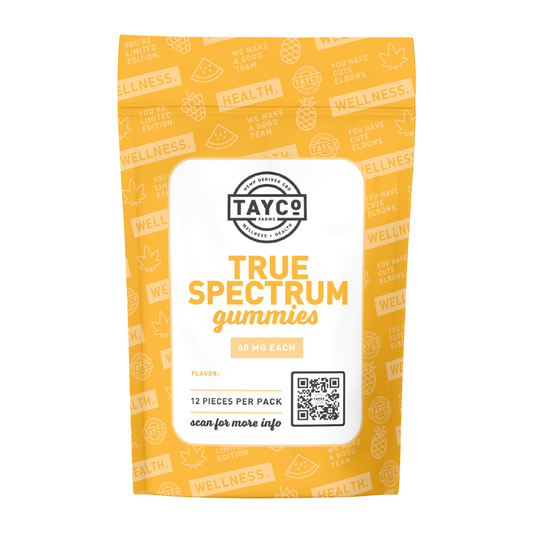
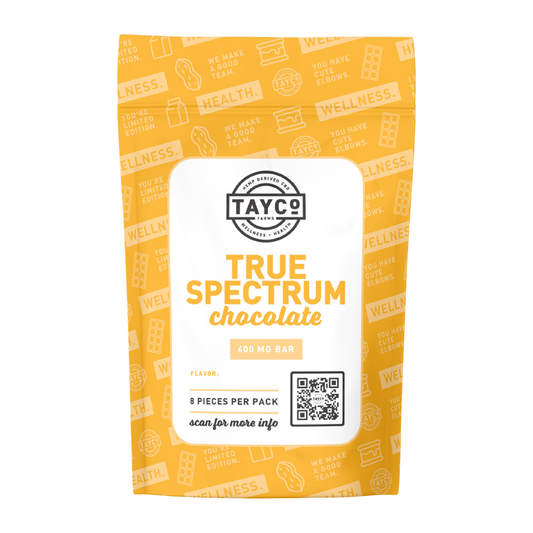
“True Spectrum” is a phrase that shows up more and more on hemp edible labels—but very few people can clearly explain what it means. Is it the same as full spectrum? Is it just marketing language? Or does it describe something specific about how the product was made?
This article breaks down what “True Spectrum” actually refers to, how it differs from isolate or distillate-based edibles, and what to look for if you want to understand what’s really inside a gummy, chocolate, or beverage.
Why Edible Labels Have Become So Confusing
As the hemp market expanded, edible formulations diversified quickly. Gummies, chocolates, and drinks can now be made using isolates, distillates, broad-spectrum blends, or whole-plant extracts—each with very different compositions.
Unfortunately, label terminology hasn’t always kept pace, leading to overlapping terms that sound similar but mean very different things.
What “True Spectrum” Is Intended to Describe
At its core, “True Spectrum” refers to an extract that preserves a broad range of naturally occurring compounds from the hemp plant rather than isolating a single cannabinoid.
This typically includes:
- Primary cannabinoids (such as CBD or Delta-9 THC)
- Minor cannabinoids present in the original material
- Naturally occurring plant compounds retained through extraction
The emphasis is on maintaining the plant’s original chemical complexity rather than reconstructing it after the fact.
True Spectrum vs Isolate-Based Edibles
Isolate-based edibles start with a single purified compound, often in crystalline or powdered form. That isolate is then added to a recipe to achieve a precise milligram count.
While isolates offer consistency and simplicity, they lack the broader compound profile found in whole-plant extracts.
True Spectrum formulations, by contrast, begin with an extract that already contains multiple compounds in naturally occurring ratios.
True Spectrum vs Distillate Formulations
Distillates occupy a middle ground. They’re refined to concentrate specific cannabinoids, often stripping away lighter compounds in the process.
Some brands reintroduce selected terpenes or minor cannabinoids after distillation. While this can improve flavor or aroma, it differs from preserving the original plant profile throughout the process.
True Spectrum products aim to retain that profile from extraction through formulation, rather than rebuilding it later.
Why “Full Spectrum” Isn’t Always Clear
The term “full spectrum” is widely used but loosely defined. In practice, it can refer to:
- Whole-plant extracts
- Broad cannabinoid blends
- Distillates with reintroduced compounds
Because of this ambiguity, some brands use “True Spectrum” to signal a more literal preservation of plant chemistry rather than a reconstructed blend.
What to Look for on the Label
If you’re evaluating a product labeled “True Spectrum,” documentation matters more than terminology.
Check for:
- COAs showing multiple cannabinoids
- Clear milligram breakdown per serving
- Consistency between label claims and lab results
- Batch-specific testing
These indicators provide more clarity than marketing language alone.
Why Spectrum Matters More in Edibles
Edibles are processed products. Once hemp compounds are infused into food, the original plant material is no longer visible.
This makes transparency around extraction and formulation especially important. Understanding spectrum helps consumers distinguish between simple cannabinoid delivery and products designed to reflect the plant more holistically.
Frequently Asked Questions About True Spectrum Edibles
Is True Spectrum the same as full spectrum?
Not always. While the terms overlap, True Spectrum is often used to emphasize preservation of the original extract profile rather than reassembled blends.
Does True Spectrum mean stronger?
No. Strength is determined by milligrams per serving. Spectrum refers to composition, not potency.
Can True Spectrum edibles still be compliant?
Yes. Compliance depends on Delta-9 THC content per serving and per package, not on the number of cannabinoids present.
How can I verify a True Spectrum claim?
Review the COA to confirm the presence of multiple cannabinoids and ensure the label matches the lab results.
The Bottom Line
“True Spectrum” isn’t just a buzzword—it’s meant to describe how closely an edible reflects the original hemp extract used to make it. Understanding the difference between isolate, distillate, and spectrum-based formulations helps buyers make informed decisions without relying on vague label claims.






0 comments